
Will AI take my job?
Channel 4 just ran an experiment and here’s what it revealed about the future of work.

It’s no longer a question of if AI will take your job but how much of it.
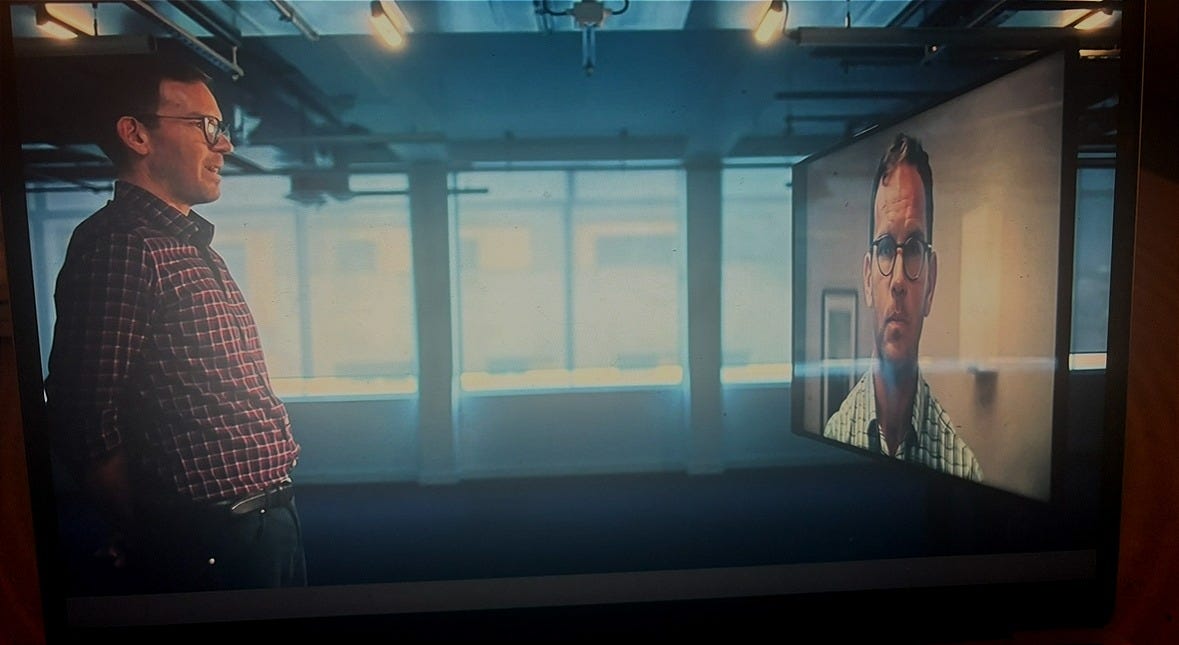
A GP, a photographer, a solicitor and a composer walk into an experiment. Each one meets their digital twin, created from a few seconds of film. Their task is simple: compete against their AI version and see who performs better.
It sounds like science fiction, yet like so much of life now, it’s very real. In Channel 4’s latest Dispatches documentary Will AI Take My Job?, four professionals stood face to face with what’s coming.
What followed gives us a glimpse into how the next decade of work will unfold. I have to say I found it fascinating and unsettling in equal measure.
Four professions. Four digital clones. One glimpse of what’s coming for all of us.
The doctor: speed or stewardship
Dr Tom Ruston, a GP from Surrey, faced a waiting room of patients as did his AI clone. Both received the same symptoms and were asked to diagnose and recommend treatment.
The AI worked fast, seeing every patient in 25 minutes. Tom took over an hour. Yet where it mattered most, the human noticed what the system missed: a hidden bleeding ulcer, a pattern pointing to coeliac disease and a pain that needed more context.
The results were close, but Tom won. This was because experience sees what algorithms can’t and in medicine, that difference saves lives.
The photographer: creativity at scale
Fashion photographer Caris Beaumont went head-to-head with two women using AI to create a campaign for a London designer. Her team worked with models, lighting, fabric and sets. The AI team worked with prompts and laptops.
By morning, both presented their final images. The designer judged them blind and chose the AI campaign for its atmosphere and elegance.
Caris’s photos had richer texture, but speed and style tipped the balance. When both outputs look good, price and pace win. That’s why many creatives will feel the pressure first.
The lawyer: precision or price
In the legal challenge, a trainee solicitor competed with a regulated AI law tool. Both helped a builder reclaim unpaid fees.
The solicitor took four hours to prepare a document referencing case law. AI did it in ten minutes and for one-tenth of the cost. The client preferred the AI version because it looked professional and was cheap.
But when a senior lawyer reviewed both blind, she chose the human version. It showed reasoning a judge would need. The future of law will rely on both: machines for speed and humans for judgment.
The composer: emotion as technology
Composer Jim Hustwit was asked to score a scene of a paralysed man diving with sharks. His challenger used an AI music tool called Suno.
The AI’s version was cinematic and clean, but it stayed surface level. Jim’s track moved with the water, carried the weight of courage and left space for feeling. The filmmaker chose his instantly.
Emotion remains human code and is built from our memory and imagination. The machine could follow the rhythm, but it couldn’t feel the moment.
Together, they painted a clear picture of where the fault lines are forming between humans and machines.
The pattern
Across each of the tests, one thing was clear: AI triumphed on speed, cost and convenience. Humans did best when the work called for judgment, imagination or empathy.
“The machines were faster. The humans were right.”
These experiments mirror what’s already unfolding in workplaces everywhere. The push for speed is overtaking the work that brings depth and purpose, and meaning is holding on, but only just.
The shift already happening
In Channel 4’s survey of 1,000 UK business leaders, three-quarters said they’d already adopted AI for tasks once done by people. Nearly half expect smaller teams within five years.
Change is no longer limited to entry-level work. Eve graduates now face a tougher start, with unemployment rates reaching into double digits for early-career professionals. And the disruption isn’t stopping there as it creeps into the roles of experienced workers too.
But even in disruption, the balance of skills is shifting. As routine work disappears, greater value falls on what can’t be automated — judgment, empathy and creative thinking. These have always mattered, but now they’re becoming the foundation of modern-day expertise.
These shifts are already reshaping what ‘work’ means.
What this signals about the future
The coming decade will be defined by our growing collaboration with machines. These five shifts are already taking shape:
Speed sets the standard
Future professionals will use AI to work faster and think more clearly. Skill with tools will open the door, but depth, judgment and creativity will decide who thrives.Human work stays where the stakes are high.
Wherever mistakes carry real cost like in health, justice, safety or trust, humans remain essential. We will be valued for the judgment and accountability that machines can’t hold.The market rewards the quickest
Clients are already choosing speed and price over craft. When both options look good, trust and taste don’t always win but as everything starts to look the same, the need for reliability and meaning will return.Jobs across industries are fragmenting
AI can now handle parts of many roles like drafting, editing, image creation and diagnosis without replacing the whole job. Fewer people are needed to achieve the same results and the smaller tasks that once helped new talent learn the ropes are disappearing. Careers will grow through projects, collaborations and continuous learning rather than steady ladders.Retraining becomes continuous.
The most valuable learning now happens through the work itself. The people who stay curious and keep learning as they go will adapt fastest, because adaptability itself is becoming the core skill.
So what can you actually do with all this?

What to start thinking about
Five practical actions for readers who want to stay employable and fulfilled as AI reshapes work.
Rescope your role
Take a close look at how you spend your week. Identify where AI tools can make your work easier or faster and where awareness, judgment or care still matter most. Redesign your role or how you describe it, around those human strengths. Keep testing the tools so you understand what they can and can’t do and where your true value lies.
Sharpen your edge
Set aside time each week to explore ideas beyond your main field eg psychology, design, ecology, philosophy, technology or economics. Watch how different systems work and how ideas connect across them. Then bring one of those insights back into your own work. Cross-disciplinary curiosity builds creative range and perspective that algorithms can’t easily copy because it grows from lived experience and intuition.
Work with AI early
Start experimenting before you feel behind. Use AI for small, low-risk tasks such as outlining, analysing notes, summarising data or generating new ideas. Learn its limits and notice where bias or shallowness appears. Use it to widen your thinking, not replace it. The goal is a partnership where you use the machine for speed and structure, while you focus on context, nuance and meaning.
Be honest with yourself
If you’re in a field where AI is already taking over key tasks, start preparing now. Look closely at how the technology is changing your day-to-day work. If most of what you do can be done faster or cheaper by a machine, consider repositioning, retraining or even changing direction before the pressure hits. Moving early gives you options rather than being caught out.
Diversify your income
Relying on one employer or client makes you vulnerable to forces outside your control. Start building a mix of income streams such as part-time roles, freelance projects, teaching, digital products or small side ventures. Each one doesn’t need to be large; together they create stability. Variety protects you from sudden changes and often opens new interests or markets along the way.

No one is coming to future-proof your work for you… it’s your move now.
A final reflection
Every generation builds tools to make life easier and ends up rediscovering what only humans can hold.
The Channel 4 experiment was a dress rehearsal for what’s already on its way.
Overall the humans won, but only just and their victory came from careful judgment, emotional understanding and a sense of timing that matched the moment rather than the data.
As AI accelerates, it will show which kinds of work still need human direction and adaptability. The future will belong to those who take leadership in shaping, and reshaping, their own careers alongside the machines.
So after the credits roll, one question remains. Knowing what’s coming, what will you do to shape your own future of work?
That’s where your agency begins in choosing how to respond, how to adapt, and how to design the next version of your work.
If you’re at a career crossroads and need a little clarity, I’m offering free 30-minute Crossroads Conversations every Wednesday. It’s an easy first step if you’re ready to start figuring out what’s next. Book a slot here.
Such an interesting experiment! I'll have to watch the whole show. And I agree with your insights—we'll need to learn to co-exist with AI. There will be a niche demand for human imagination, but AI will become more prevalent in most industries.
This article comes at the perfect time, you really nail how important human intuition remains. How do we best cultivate this unique human advantage in the next generaton?